As most of us all know, Adobe had held the industry standard for practically any form of professional multimedia work. Photos, videos, audio, motion graphics, all of these are have their own editing product created by Adobe and are largely used as by the entire creative field.
Now, I would be oblivious to say that their ecosystem doesn’t have any benefit. The interoperability between each piece of software, like being able to import an After Effects composition directly into a Premiere Pro timeline is very powerful and quickens the production pipeline by requiring one less render to wait for and then add to the timeline.
However, Adobe has been, and should still be criticized for their shady business tactics. From their “annual plan, but paid monthly” to their “wait, no! please don’t leave, here’s a hefty discount!” to just their plain monopoly on the industry. A lot of people have been attempting to leave or rely less on the Adobe suite of products. And I am no different.
I needed to get away from Adobe.
During my long and treacherous quest to get away from the chokehold of Adobe products, I’ve attempted to replace almost every Adobe app with a comparable alternative. For the most part, this journey has been honestly been very successful.
As a “professional” video editor, I primarily used most of the multimedia related Adobe products. So while I can’t recommend alternatives to everything, you can see my specific replacements here:
| Adobe Product | My Purpose | My Alternative |
|---|---|---|
| Premiere Pro | Video editing. | DaVinci Resolve Studio |
| Photoshop | Non-destructive photo editing. | Affinity Photo 2 |
| After Effects | Motion graphic design. | Cavalry |
| Audition | Audio recording and editing. | Audacity |
The one that I specifically want to highlight in this post today is my Photoshop alternative, Affinity Photo.
Before I learned how to use Photoshop, my program of choice was a piece of software called paint.net - and no, it’s not a website despite the name. With the addition of community made plugins, it was fairly comparable photo editor.
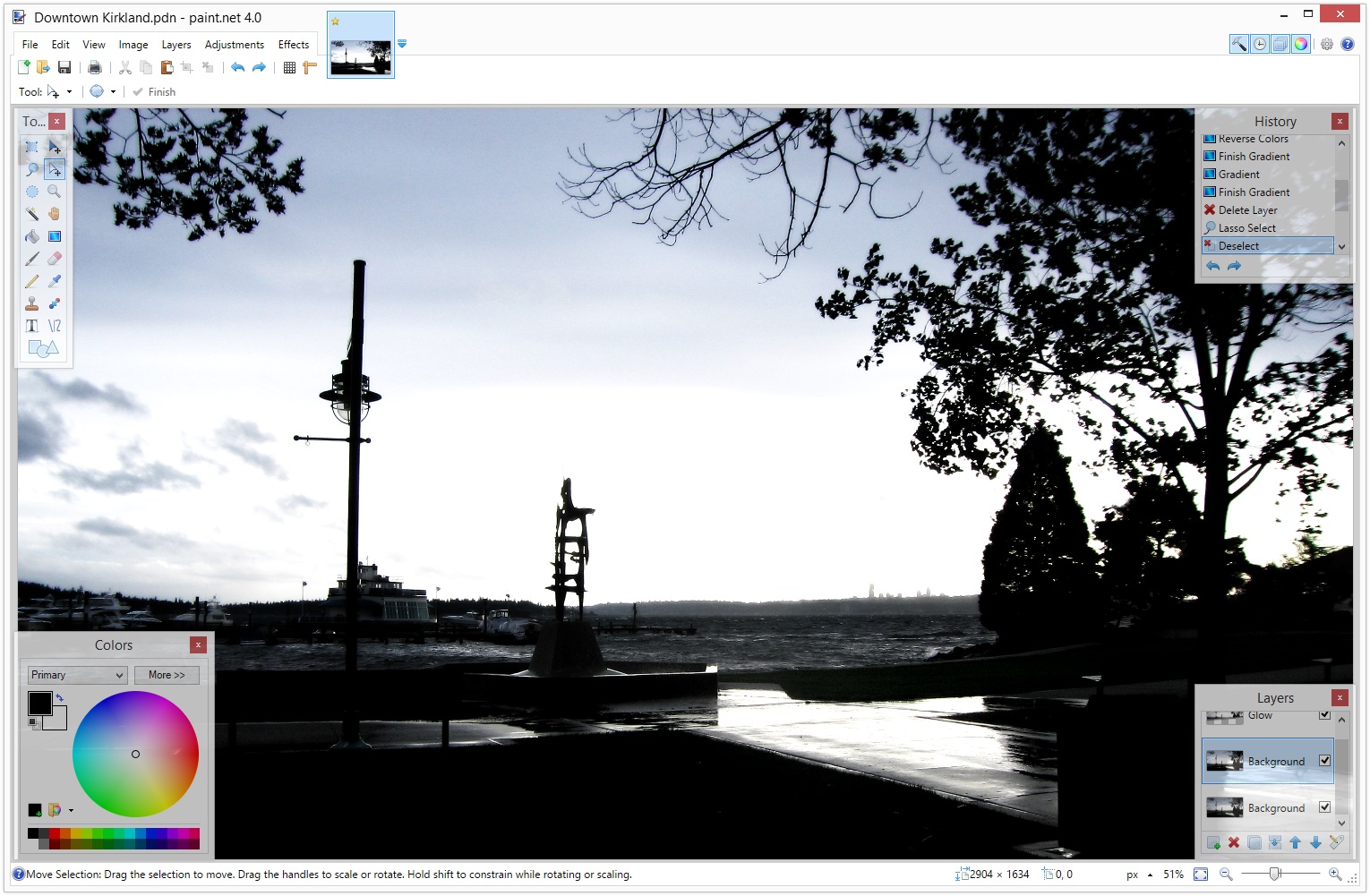
But it had one glaring flaw. It edited photos destructively.
You might be asking yourself what that means. It’s pretty simple. Destructive photo editing means that once you apply a change, it is permanently applied to the image and can’t be undone. Let’s say on one layer you had imported an image. If you added a drop shadow, it is now a part of that layer. You can’t go back and remove the drop shadow from the image. Whereas nondestructive photo editing allows you to go back and remove the drop shadow at any point.
They got me.
As time went on, my need for a nondestructive photo editor grew, so I sucked it up and decided to learn how to use Photoshop.
Now unlike most people, who may sail the seven seas for a copy of any Adobe product, I was naive and utilized my student discount to properly pay for the entire Adobe suite of products. At the time, I thought I had got a really good deal compared to the retail price of the subscription.
What I didn’t know, is that I just paid for a yearly contract, but paid monthly.
Now you might be thinking, isn’t that just paying for it monthly? And you would be partially correct. You do pay for the subscription each month, however Adobe locks you in to committing to pay for the subscription each month for a year. And if you decide you don’t want to pay for Adobe anymore, you will be hit with a cancellation fee of varying magnitude depending on how long you have left in your contract.
So I was stuck paying for Adobe until my contract ended. Needless to say, I went searching for an alternative.
My love for Affinity Photo 2.
That’s when I did some searching, and found that a lot of people were recommending a piece of software called Affinity Photo. Created by a company named Serif, it looked like an ideal alternative. A professional-grade nondestructive photo editor, capable of opening .psd files. And the best part was, it was a one time payment.

So I tried their 30 day free trial and fell in love.
Now look, I’m a firm believer that you should pay for software that you find use out of, but I also understand that for many people (myself included), a large upfront cost is a barrier of entry that a subscription model or “sailing the seven seas” may look like the better option. And I don’t blame you.
But I really felt like there was value in having a proper professional grade alternative to Photoshop, that you actually owned and didn’t have to continue paying for perpetually, unlike Adobe.
As time went on, I ended up sticking with Affinity Photo for quite some time. Fun fact - every single blog post on this website had a thumbnail created in Affinity Photo.
Wait, what are they doing?
In March of 2024, Canva announced that it would acquire Serif, the company behind the Affinity suite of products. Canva is a website that allows the average person to participate in graphic design.
Now I’ll be honest, when the news came out, my heart sank. Generally speaking, any time a company who’s product I use is acquired, I immediately become skeptical. But in response to a lot of people’s skepticism, Canva announced that it would make four pledges to the community regarding Affinity.
- We are committed to fair, transparent and affordable pricing, including the perpetual licenses that have made Affinity special.
- We will double down on expanding Affinity’s products through continued investment in Affinity as a standalone product suite.
- We will provide Affinity free for schools and nonprofits.
- We are committed to listening and being led by the design community at every step in this journey.
Now while this helped to calm fears, a lot of people, myself included, still raised an eyebrow to this.
But to be honest, for quite some time, nothing happened. As a matter of fact, I entirely forgot about the fact that Canva bought Serif.
”Creative Freedom Is Coming”
Or that was the case up until last month, or October.
Affinity’s website, storefront, and forum had been completely paused, instead presenting everyone with a landing page that said in giant letters “Creative Freedom Is Coming” and saying that “creative freedom is just around the corner. October 30.”
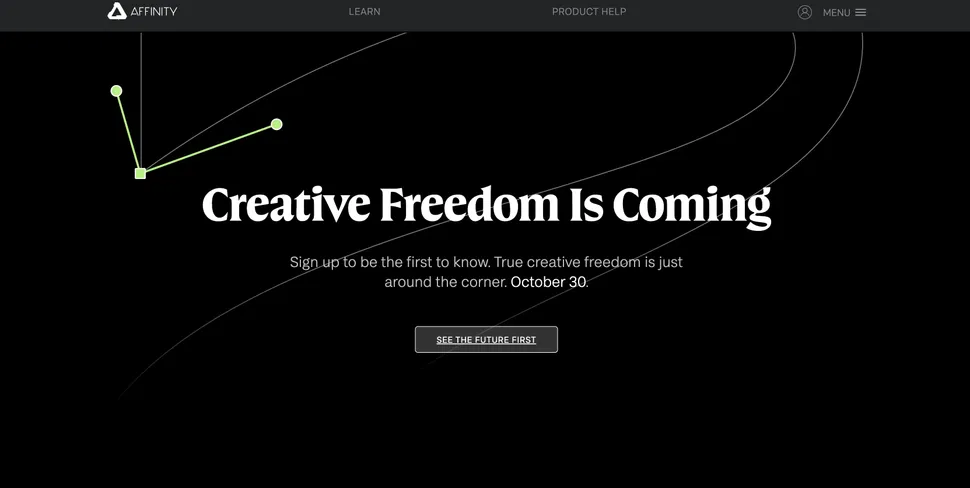
And of course, like clockwork, every single user began to panic. Did Affinity become the thing they sought out to destroy? Are they going subscription based? What happens to all of the products we paid for?
Even I had my own worries about the news.
Affinity wasn’t doing itself any justice either, on the everything app Affinity kept responding to comments of people’s worries and concerns with nondescript generic answers.
We hear you! Fairness and freedom are what Affinity was built on and we’re excited to share what we’ve been building. Hold tight to October 30, you’ll like what’s coming.
— Affinity (@Affinity) October 3, 2025
But all that we could do is wait.
They made it free?!
You heard that heading right, on October 30th they had announced a change that shocked many people, myself included.
Affinity had gone completely free! Along with that, their entire creative suite which consisted of Photo, Designer, and Publisher were all condensed into one single app simply titled “Affinity” where you can switch freely between raster, vector and layout related image editing.
The all new Affinity is here!
— Affinity (@Affinity) October 30, 2025
Design, edit photos and layout your work, all in one app — for free 💥
Download Affinity now on macOS or Windows: https://t.co/ezAfO0T3Ih pic.twitter.com/T5I0EjU999
Now, of course, I would be completely oblivious if I didn’t mention the glaring concern. If Affinity is now free, what’s the catch? Will Canva train on our work to train and power their AI? Is Canva selling user data? How can Canva reasonably afford to keep Affinity free?
Supposedly according to Canva, they will be doing NONE of that. While you will need a Canva account to login, all of the base functionality is and will always remain that way. Canva has amassed over 28 million paying customers with $3.5 billion in annual revenue. And they claim that this is enough to sustain developing professional grade software for free.
My main concern is how long this realistically lasts for. While Canva is not a publicly traded company, things can change. At any point things could change. Canva could become a publicly traded company, at which point they are obligated to appease shareholders. Will they start their “cash grab” then? It’s anybodies guess.
The state of privacy.
The truth is, this concern exists for a lot of pieces of software and a lot of digital goods.
I’ve been using computers for far longer than I should considering how old I am. I have seen first hand many products shift from being one time purchases, where you actually owned the thing you were paying for, to perpetually paid subscription models where they reserve the right to revoke your “license” at any point.
Digital ownership, among many other things, are in very sad state and it’s important to note when these things happen. While I will continue to use Affinity until it no longer fits my purpose, huge changes like these often have bad consequences. Regardless of if it’s long term or short term.
But we’ll have to see how things pan out.
And hey, thanks for reading.
❤️